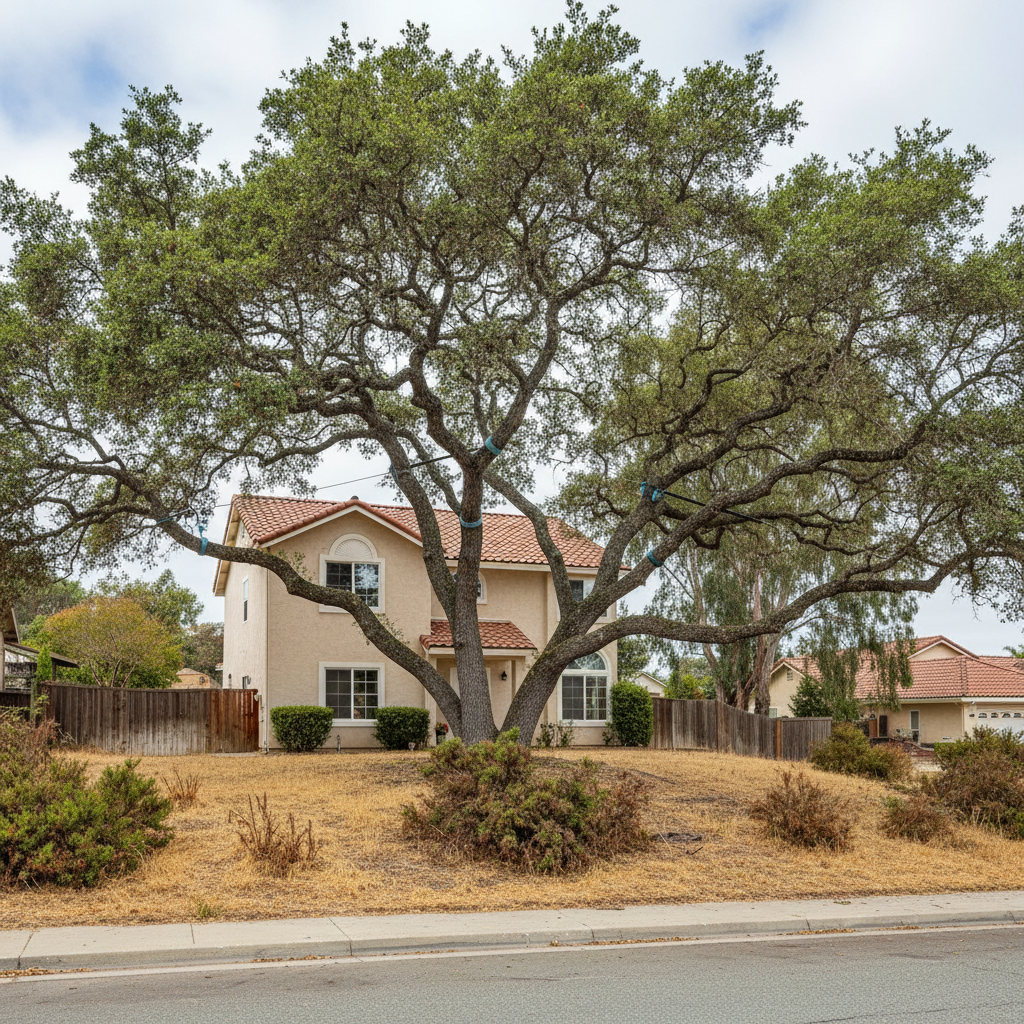
Is that big oak in your front yard looking a little… stressed? Maybe a major limb is hanging lower than it used to, or you've noticed a crack starting where two big branches meet. You're not alone. Here in Grover Beach, we see a lot of trees that could use a little extra support, and that's where tree cabling and bracing come in.
What Even Is Tree Cabling and Bracing?
Think of it like putting a cast on a broken arm, or giving a weak knee a brace. When a tree has structural issues – maybe a weak crotch where two main stems split, or a long, heavy limb that's prone to breaking – we can install cables or rods to provide support. It's all about preventing failure, not just reacting to it.
Cabling involves putting steel cables high up in the canopy, usually between two weak limbs or stems, to limit their movement relative to each other. It's like a safety net, distributing the load and keeping things from tearing apart in a strong gust of wind. Bracing, on the other hand, uses rigid steel rods drilled through weak unions or cracks to hold them firmly together. We often use both together for maximum stability.
Why It Matters So Much Here in Grover Beach
You know our weather. We get those beautiful, sunny days, but then we also get those strong, consistent winds off the Pacific, especially in the afternoon. That constant buffeting puts a lot of stress on trees, particularly those with broad canopies or multiple leaders. I've seen plenty of mature eucalyptus and Monterey cypress, common in our older neighborhoods like the ones around the Grand Avenue corridor, that really benefit from this kind of proactive support. They grow fast, they get big, and sometimes their natural structure just can't handle the coastal conditions without a little help.
Beyond the wind, we also have to consider our soil. Our sandy, sometimes unstable soil conditions can affect root stability over time, indirectly putting more stress on the upper canopy. A tree that might be fine in a different environment could be at higher risk here.
Common Scenarios Where We Recommend It
Co-dominant Stems: This is probably the most common. You've got two main trunks that grew up together, forming a V-shape. That 'V' is a weak point, prone to splitting, especially when heavy with leaves or after a good rain. Cabling can prevent a catastrophic split.
Over-extended Limbs: Some trees just have a habit of throwing out really long, heavy branches. If one of these is hanging over your house, your car, or a play area, it's a major liability. A cable can help support that limb and reduce the risk of it breaking off.
Included Bark: This is a fancy term for when the bark grows inward between two stems instead of forming a strong union. It's a recipe for weakness, and bracing often helps here.
After Storm Damage: Sometimes a tree gets partially damaged but isn't a goner. We can often cable and brace it to help it recover and regain its strength, saving you the cost and hassle of full removal.
It's Not a DIY Job, Trust Me
I've been doing this for years with Classic Tree, and I can tell you, this isn't something you want to tackle with a ladder and some rope from the hardware store. It requires specialized equipment, a deep understanding of tree biomechanics, and knowing exactly where to place the cables and rods for maximum effectiveness without causing more harm. You need to know how the tree grows, how it moves in the wind, and what kind of stress it's under.
Improper installation can actually weaken the tree further, girdle limbs, or even lead to total failure. Plus, working high up in a tree with heavy equipment? That's a serious safety risk for anyone not professionally trained and insured.
The Goal: Safety and Longevity
Ultimately, when we cable or brace a tree, our goal is two-fold: make it safer for you and your property, and extend the life of the tree. A healthy, stable tree adds value and beauty to your home. It provides shade, improves air quality, and supports local wildlife. Losing a mature tree is a big deal, and sometimes, a little structural support is all it takes to keep it standing tall for many more years to come.
If you've got a tree you're worried about, give us a call. We'll come out, take a look, and give you an honest assessment of whether cabling and bracing is the right solution for your specific tree.