When's the best time to trim my shrubs and bushes around here?
This is probably the number one question I get, and honestly, there's no single perfect answer for every plant. Generally, for most flowering shrubs, you want to trim them right after they finish blooming. That way, you're not cutting off the buds for next year's flowers. For evergreen shrubs that don't flower much, or for purely structural pruning, late winter or early spring, before new growth really kicks in, is often ideal. It gives them a chance to recover quickly.
Now, here in Grover Beach, with our mild climate, you've got a bit more flexibility than folks living in harsher zones. We don't get super hard freezes that'll shock a freshly cut plant. But you still want to avoid heavy trimming in the peak heat of summer – that can stress them out. If you're dealing with something specific, like a camellia or a rhododendron, the timing might be a little different. Best bet is to know what you've got and then look up its specific needs, or just give me a call. We've seen it all with Classic Tree, so we can tell you what works.
How often should I be trimming my shrubs?
Again, it depends on the plant and what you're trying to achieve. For formal hedges, like those boxwoods you see in some of the older neighborhoods near the dunes, you might be trimming them two or three times a year to keep that crisp shape. For most other shrubs, though, once a year is usually enough to maintain their size and health. Some slow-growing varieties might only need a touch-up every couple of years.
Think about what the plant is doing. Is it getting too big for its spot? Is it blocking a window or a pathway? Are there a lot of dead or diseased branches? These are all signs it's time for a trim, even if it's not on your usual schedule. Don't just trim for the sake of trimming; trim with a purpose.
What's the difference between 'pruning' and 'trimming'?
People use these terms interchangeably a lot, and for most homeowners, it doesn't really matter. But professionally, there's a slight distinction. 'Pruning' is usually more about the health and structure of the plant. You're removing dead, diseased, or damaged branches, improving air circulation, encouraging fruit or flower production, or shaping the plant for long-term health. It's often more selective cuts.
'Trimming,' on the other hand, is often about maintaining a specific size or shape, like shearing a hedge or cutting back growth that's getting out of bounds. It can be less selective and more about aesthetics. Both are important for good plant care, but they have slightly different goals. I'll use them both, you'll hear me say 'trimming' when I'm talking about the general upkeep of your bushes.
Can I just use hedge shears for everything?
You can, but you probably shouldn't. Hedge shears, especially electric or gas-powered ones, are great for quickly shaping hedges and getting a uniform look. They're good for the 'trimming' part we just talked about. But they make a lot of small cuts, which can sometimes leave a plant looking a bit ragged up close, and they don't always give you the cleanest cut for the plant's health.
For 'pruning' – removing larger branches, making selective cuts, or getting rid of dead wood – you really need bypass pruners (for smaller stuff), loppers (for branches up to about 2 inches thick), and sometimes a hand saw for anything bigger. These tools make clean cuts that heal better and reduce the risk of disease. Using the right tool for the job makes a big difference for the plant's health and how it looks afterward.
My shrubs are overgrown. Can they be saved, or do I need to replace them?
Most of the time, yes, they can be saved! It's amazing what a good rejuvenation prune can do. If your shrubs are really overgrown, leggy, or just a tangled mess, we can often cut them back hard – sometimes almost to the ground, depending on the species – to encourage new, healthy growth from the base. This is called 'rejuvenation pruning' or 'hard pruning.'
It takes time for them to grow back, and they might look pretty bare for a season, but many shrubs respond incredibly well to it. It's a lot cheaper than replacing them, too. Of course, there are always exceptions. If a plant is truly diseased beyond recovery, or if it's just in the wrong spot and will always be overgrown, replacement might be the better long-term solution. But don't give up on them without talking to someone who knows what they're doing first.
What should I do with the trimmings?
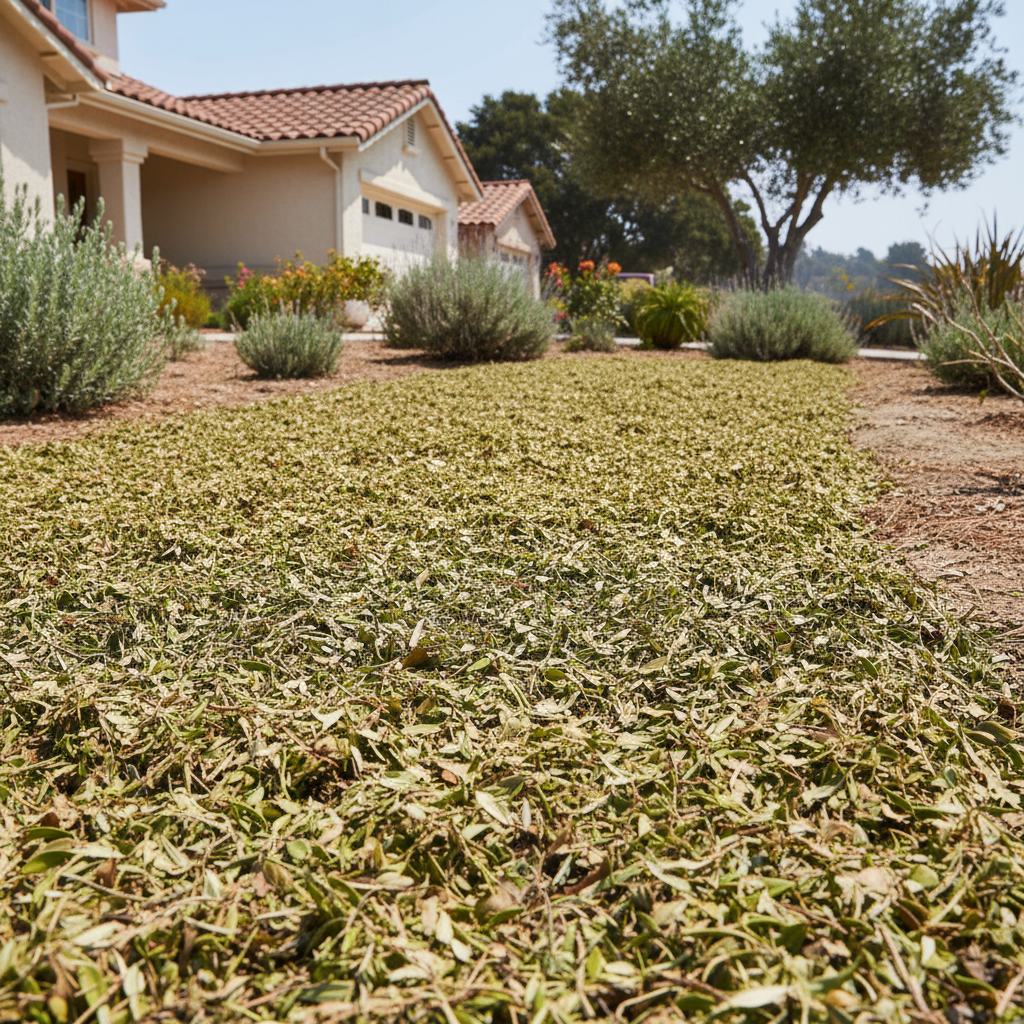
Once we're done, you've got a few options for those trimmings. For small amounts, you can often just toss them in your green waste bin for curbside pickup here in Grover Beach. If you've got a lot, especially after a big job, you might need to haul them to the local green waste facility yourself, or we can handle the disposal for you. That's usually part of our service if you hire us.
Another option, if you're into gardening, is to chip them up for mulch. Smaller, softer trimmings can even be added to a compost pile. Just make sure you're not composting anything diseased, as that can spread problems. Whatever you do, don't just leave piles of trimmings around; they can become homes for pests and look messy.